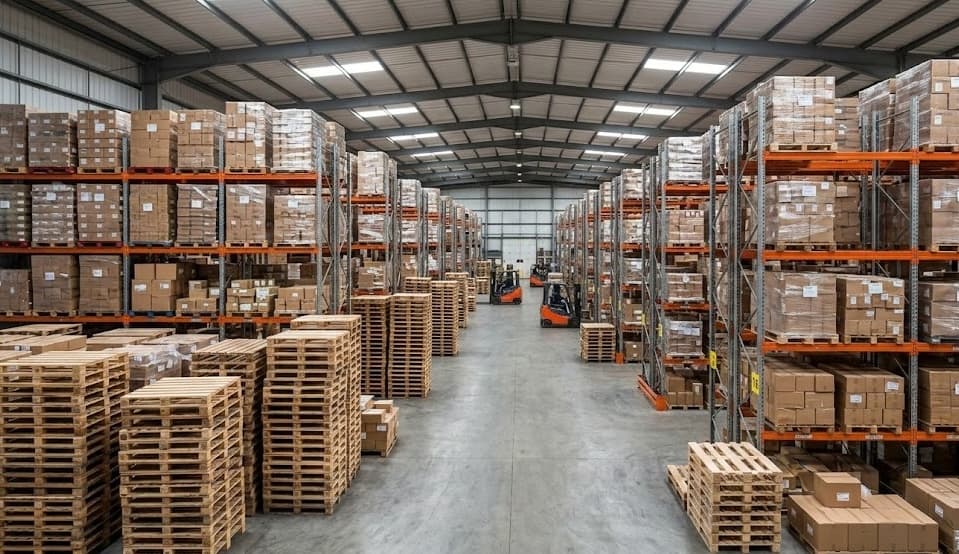
Food & Beverage Pallets
Food-safe, heat-treated pallets built for the rigorous demands of food distribution, cold storage, and beverage logistics. ISPM 15 certified and FSMA compliant.
Why Food & Beverage Demands Specialized Pallets
The food and beverage industry operates under some of the strictest regulatory frameworks in the supply chain. The FDA's Food Safety Modernization Act (FSMA) holds every link in the chain — including packaging and pallets — accountable for food safety. A contaminated or improperly treated pallet can result in product recalls, facility shutdowns, and devastating brand damage.
At Anaheim Eco Pallets, we supply over 40 food and beverage companies across Southern California with pallets that meet or exceed industry safety standards. Every food-grade pallet we deliver is heat-treated to ISPM 15 specifications, visually inspected for contamination, and graded to ensure structural integrity under load.
Our food and beverage clients include grocery distributors, cold storage operators, beverage manufacturers, dairy processors, produce packers, and restaurant supply companies. Each operates under different conditions, but all share the same need: clean, reliable, compliant pallets delivered on schedule.
Food Industry Pallet Requirements
Heat Treatment (ISPM 15)
All food-grade pallets are heat-treated to a core temperature of 56°C for 30+ minutes, killing bacteria, fungi, and insects. Every pallet carries the IPPC/ISPM 15 stamp. We never use chemical fumigation — only heat treatment, which leaves zero residue.
Visual Contamination Inspection
Every pallet undergoes a visual inspection for staining, odors, chemical residue, mold, and biological contamination. Pallets with any sign of contamination are rejected from the food-grade stream and routed to non-food applications or recycling.
Structural Integrity
Food products are often heavy — cases of canned goods, beverages, dairy products. Our food-grade pallets are Grade A or Grade B, rated for loads up to 2,500 lbs. Every pallet is load-tested to ensure it won't fail under weight, which could damage product and create safety hazards.
Cold Storage Compatibility
Cold chain environments (refrigerated warehouses, freezer storage) create unique challenges for pallets. Moisture from temperature cycling can degrade untreated wood. Our heat-treated pallets are specifically prepared for cold storage environments with controlled moisture content below 19%.
Traceability & Documentation
FSMA requires supply chain traceability. We provide batch documentation for every delivery, including heat treatment certificates, grade specifications, and source tracking. This paperwork supports your food safety audits and regulatory compliance.
Consistent Supply
Food distribution can't stop because pallets aren't available. We maintain dedicated food-grade inventory and offer scheduled weekly or bi-weekly delivery to ensure you never run short. Our 95%+ on-time delivery rate means your dock runs on schedule.
Food & Beverage Subsectors We Serve
Grocery Distribution
Grade A pallets for retail-facing deliveries. Clean appearance, consistent dimensions, full load capacity. Compatible with grocery DC conveyor and racking systems.
Cold Storage & Freezer
Low-moisture, heat-treated pallets designed for refrigerated and frozen environments. Resistant to the expansion/contraction cycles that damage standard pallets in cold chain.
Beverage Manufacturing
Heavy-duty pallets rated for full beverage loads (2,000-2,500 lbs). Block pallets available for four-way access. High-volume supply with weekly delivery schedules.
Produce & Agriculture
Ventilated pallet designs for airflow around fresh produce. ISPM 15-certified for export shipments. Seasonal surge capacity for harvest peaks.
Dairy & Protein
Hygienic pallets for dairy processing and meat/poultry distribution. Meets USDA requirements. Plastic pallet options available for washdown environments.
Restaurant & Foodservice Supply
Mixed-load compatible pallets for diverse product assortments. Standard 48×40 GMA format compatible with foodservice distribution workflows.
Wood vs. Plastic Pallets for Food Applications
Heat-Treated Wood
- Cost-effective: $5-10 per pallet (recycled Grade A)
- Naturally antimicrobial wood surface
- ISPM 15 compliant for domestic and export
- Repairable and recyclable at end of life
- Best for: open-loop systems, general food distribution
Plastic (HDPE)
- Premium price: $30-80 per pallet
- Non-porous, washable, sanitizable
- ISPM 15-exempt (no treatment needed)
- 10+ year lifespan in closed-loop systems
- Best for: clean rooms, washdown areas, closed-loop systems
Most food distribution operations use heat-treated wood pallets. We recommend plastic only where washdown or clean-room requirements make it necessary.
Compliance & Certifications
FSMA Compliance
The Food Safety Modernization Act requires preventive controls throughout the food supply chain. Our heat treatment, contamination screening, and documentation processes are designed to support your FSMA compliance program. We provide all records needed for FDA audits.
ISPM 15 Certification
Every food-grade pallet we ship carries the IPPC/ISPM 15 stamp with heat treatment (HT) designation. Our treatment facility is licensed and regularly audited. We never use methyl bromide fumigation.
SQF & BRC Audit Support
Many of our food clients maintain SQF, BRC, or GFSI certifications that include pallet sourcing in their audit scope. We provide supplier documentation, material safety data, and treatment certificates to support your audit requirements.
California Prop 65
Our heat treatment process uses no chemicals — only thermal energy. Our pallets are free of chemical treatments, coatings, and preservatives that could trigger Proposition 65 warnings.
Client Spotlight: SoCal Food Distributor
A mid-size food distribution company serving grocery chains across Orange County and the Inland Empire turned to Anaheim Eco Pallets to solve escalating pallet costs and compliance gaps.
- ✕Purchasing brand-new pallets at $14 each from a national supplier
- ✕Annual pallet spend exceeded $180,000 with no volume discounts
- ✕No pallet recycling or return program — used pallets went straight to the landfill
- ✕Inconsistent documentation made FSMA audits stressful and time-consuming
- ✓Switched to Anaheim Eco Pallets Grade A heat-treated pallets at $7 per pallet
- ✓Weekly scheduled delivery of 250+ pallets to their Anaheim distribution center
- ✓Pallet return program established — we pick up used pallets at no charge for recycling
- ✓Full documentation package provided with every delivery: HT certs, grade specs, batch tracking
- →52% cost reduction — annual pallet spend dropped from $180K to $87K, saving $93,000 per year
- →FSMA audit passed with zero findings related to pallet sourcing, treatment, or documentation
- →15,000 pallets recycled annually through the return program, eliminating landfill disposal
- →Zero delivery misses in 18 months of weekly scheduled service
Food Safety Audit Pallet Checklist
Before your next SQF, BRC, or FSMA audit, verify that your pallet program covers all of these items. Anaheim Eco Pallets provides documentation support for every point on this list.
Heat treatment certificates available
ISPM 15 HT certificates should be on file for every pallet lot received. Verify the treatment facility license number matches your supplier records.
Visual inspection records on file
Document your incoming pallet inspection process, including what you check for (stains, odors, mold, damage) and the accept/reject criteria used.
Contamination screening documented
Demonstrate that pallets entering food-contact areas have been screened for chemical residue, biological contamination, and foreign materials.
Supplier qualification completed
Your pallet supplier should be listed in your approved supplier program with a completed questionnaire, certificates, and periodic review schedule.
Storage conditions documented
Show that pallets are stored properly before use — off the ground, covered or indoors, separated from potential contaminants and pest harborage areas.
Traceability records current
Maintain batch-level traceability from your supplier to your facility. Records should link delivery dates, lot numbers, and quantities to specific usage areas.
Grade specifications match purchase orders
Verify that the pallet grade you ordered (e.g., Grade A, Grade B) matches what was delivered. Spot-check dimensions, board count, and fastener condition.
Replacement/rejection procedures documented
Have a written procedure for what happens when a pallet fails inspection — who rejects it, where it goes, how it's replaced, and how the incident is recorded.
Pallet Performance by Temperature
Different temperature environments place different demands on pallet materials. Use this guide to select the right pallet type for each zone in your food facility.
| Environment | Temp Range | Recommended Pallet | Notes |
|---|---|---|---|
| Ambient | 60–80°F | Standard HT Wood | Standard heat-treated wood pallets perform well at room temperature. Moisture content is not a concern in climate-controlled dry storage. Most cost-effective option for general warehouse and distribution. |
| Refrigerated | 33–40°F | HT Wood or Plastic | Refrigerated environments introduce condensation risk during temperature transitions. Use heat-treated wood with verified moisture content below 19%, or switch to HDPE plastic pallets for washdown coolers. |
| Frozen | -10 to 0°F | Low-Moisture HT Wood or HDPE Plastic | Freezer environments cause wood fiber contraction and ice crystal formation. Low-moisture HT wood (under 15% MC) resists cracking. HDPE plastic is unaffected by freezing and ideal for long-term frozen storage. |
| Deep Freeze | -20°F and below | HDPE Plastic Recommended | Extreme cold makes standard wood brittle and prone to fracture under impact. HDPE plastic pallets maintain structural integrity down to -40°F. If wood must be used, select kiln-dried hardwood with reinforced fasteners. |
Not sure which pallet type fits your facility's temperature zones? Contact Anaheim Eco Pallets for a free assessment — we'll recommend the right mix of wood and plastic pallets based on your operation.
Get a Quote Today
Tell us about your pallet needs and we'll get back to you within 24 hours.