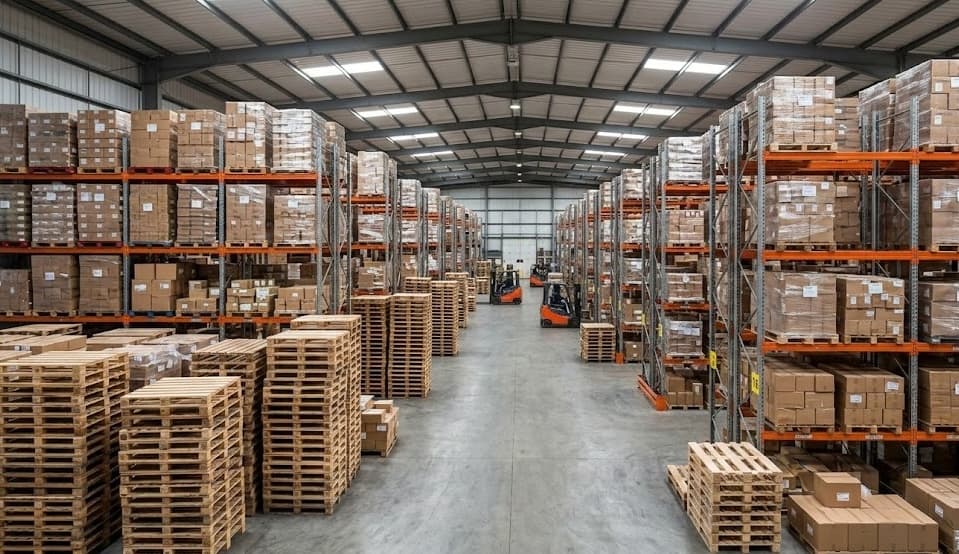
The global logistics industry is responsible for approximately 11% of worldwide greenhouse gas emissions. But a quiet revolution is underway — and it starts with something as humble as the wooden pallet.
The Pallet Problem (and Opportunity)
An estimated 2 billion pallets are in circulation in the United States alone. Each year, approximately 500 million new pallets are manufactured, consuming roughly 5.5 billion board feet of hardwood and softwood lumber. That's the equivalent of clear-cutting a forest the size of Rhode Island — every single year.
But here's the opportunity: recycled pallets require 80% less energy to prepare than manufacturing new ones. By extending the lifecycle of existing pallets through repair and recycling, we can dramatically reduce this environmental footprint.
Key Statistics
less energy for recycled vs. new pallets
board feet of lumber consumed annually
of pallets are recyclable
average reuse cycles per pallet
The Circular Economy Model
The circular economy approach to pallets means designing systems where materials are continuously cycled. Instead of the linear take-make-dispose model, circular pallet management follows a loop: use → collect → sort → repair/recycle → redistribute → use again.
Companies like Anaheim Eco Pallets are at the forefront of this shift, achieving 98% material recovery rates. Even pallets that can't be repaired are broken down into mulch, biomass fuel, or raw materials for new products.
Beyond Pallets: The Green Supply Chain
Sustainable logistics extends beyond pallet recycling. Forward-thinking companies are adopting electric delivery vehicles, optimizing routes with AI to reduce fuel consumption, using biodegradable packaging materials, and implementing reverse logistics programs that minimize waste across the entire supply chain.
What You Can Do Today
- Switch from new pallets to quality recycled alternatives
- Implement a pallet return/exchange program with your suppliers
- Repair damaged pallets instead of discarding them
- Track and report your pallet-related environmental metrics
- Partner with certified eco-pallet companies for your supply chain
The Numbers Behind Sustainable Logistics
Data paints a compelling picture. The environmental and economic case for sustainable pallet management is backed by hard numbers that no supply chain manager can afford to ignore.
of global CO₂ emissions
Freight transportation alone accounts for 8% of global carbon dioxide emissions, making logistics one of the highest-impact sectors for sustainability improvements.
of wood packaging by volume
Wood pallets represent the largest single category of wood packaging at 95% by volume — the dominant platform for global goods movement.
CO₂ saved per recycled pallet
Every single pallet that is recycled instead of manufactured new prevents approximately 11.5 pounds of carbon dioxide from entering the atmosphere.
pallets diverted from landfills
The US pallet recycling industry diverts over 500 million pallets from landfills every year, representing one of the largest wood-waste recovery efforts in the world.
tons of waste wood in California
California alone generates more than 31 million tons of waste wood annually, creating both a massive environmental challenge and a tremendous recycling opportunity.
Case Study: Regional Food Distributor
Real-world results from a Southern California food distribution company that partnered with Anaheim Eco Pallets to overhaul its pallet supply chain.
The Challenge
This mid-size regional food distributor was purchasing 50,000 new pallets per year at $14 each — an annual spend of $700,000. They had no recycling program in place, and 100% of used pallets were going directly to landfill, exposing the company to rising disposal costs and growing regulatory scrutiny under California's waste reduction mandates.
The Solution
- Switched entirely to Anaheim Eco Pallets recycled inventory for domestic shipments
- Implemented a pallet exchange program with automatic pickup and credit for returned pallets
- Established quarterly sustainability reporting with verified environmental metrics
The Results
Cost reduction — $364,000 saved per year
CO₂ emissions prevented annually
Pallets sent to landfill — 100% diversion rate
Full compliance documentation included with every order
Industry Trends Shaping Sustainable Logistics
Five macro-level forces are converging to make sustainable pallet management not just a nice-to-have, but a business imperative for logistics operations of every size.
ESG Reporting Requirements
The SEC's climate disclosure rules are driving unprecedented supply chain transparency. Companies must now quantify and report Scope 3 emissions — including those from packaging and logistics. Pallet sourcing and disposal are directly in scope, making recycled pallets a compliance advantage.
Circular Economy Adoption
Leading companies are shifting from the traditional linear model (buy, use, discard) to circular pallet programs where pallets are continuously repaired, reconditioned, and recirculated. This model reduces raw material demand, cuts costs, and creates closed-loop supply chains.
Carbon Pricing
Growing carbon tax and credit markets are making recycling economically advantageous beyond simple cost savings. California's cap-and-trade program and emerging federal frameworks mean companies that reduce emissions through recycled pallets gain a measurable financial benefit.
AI-Optimized Routes
GPS tracking and AI-powered route optimization are reducing delivery miles and fuel consumption across the logistics industry. When combined with recycled pallet programs, these technologies compound sustainability gains across the entire last-mile delivery chain.
Biodegradable Packaging Integration
The rise of biodegradable shrink wrap, compostable dunnage, and plant-based stretch film is creating opportunities to pair sustainable pallet programs with fully green packaging — delivering shipments with near-zero environmental packaging waste.
How to Start Your Sustainable Pallet Program
Transitioning to a sustainable pallet program does not require a massive upfront investment. Follow these five practical steps to start reducing costs and environmental impact today.
Audit Your Current Pallet Spend and Disposal Costs
Start with a complete accounting of how many pallets you purchase annually, what you pay per unit, and what you spend on disposal. Include hidden costs like dumpster fees, hauling charges, and labor for pallet breakdown. Most companies discover they are spending 30-50% more than they realize.
Calculate Your Carbon Footprint from Pallet Operations
Use the 11.5 lbs CO₂ per new pallet benchmark to estimate your current emissions. Multiply your annual new pallet purchases by this figure to get a baseline. This number becomes your starting point for ESG reporting and the metric you will improve against.
Switch to Recycled Pallets for Non-Export Domestic Shipping
Recycled pallets meet the same GMA/CHEP specifications as new pallets at a fraction of the cost. For domestic shipping where ISPM-15 heat treatment is not required, recycled pallets are a direct drop-in replacement with zero performance trade-offs.
Implement a Pallet Return and Exchange Program
Work with your pallet supplier to set up a return program. At Anaheim Eco Pallets, we offer scheduled pickups and credit for returned pallets in reusable condition. This closes the loop, reduces your net pallet cost, and ensures zero pallets end up in the waste stream.
Track and Report Your Impact Quarterly
Measure pallets recycled, CO₂ prevented, trees saved, and dollars reduced each quarter. Share these metrics with stakeholders, include them in sustainability reports, and use them to set increasingly ambitious targets. What gets measured gets improved.