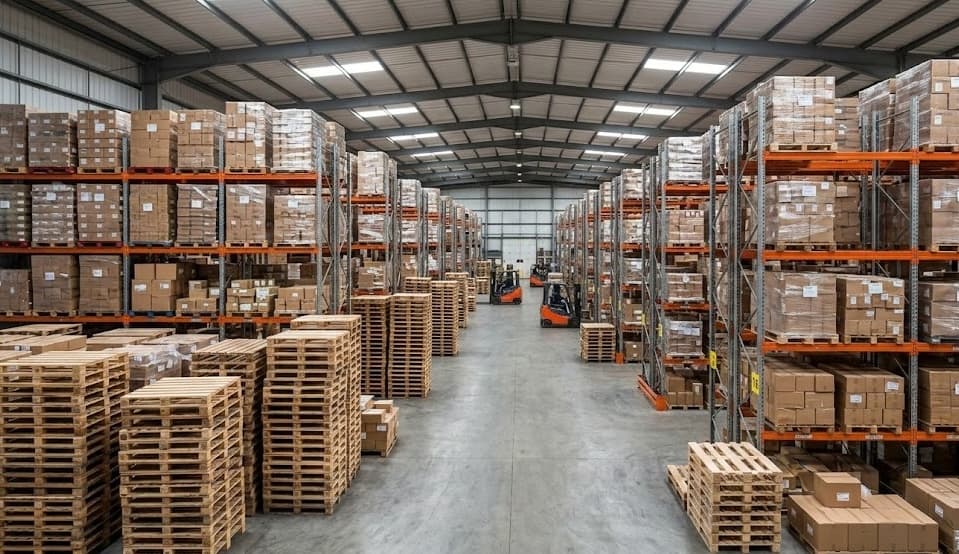
Walking into the world of pallets for the first time can be overwhelming. There are dozens of sizes, multiple materials, and different construction styles. This guide breaks it all down into plain language so you can make informed decisions for your business.
Wood pallets account for roughly 90-95% of all pallets in use. They're affordable, strong, easy to repair, and highly recyclable. The two main construction types are stringer pallets (using long boards for support) and block pallets (using individual blocks). Wood pallets can carry loads of 2,500 lbs or more when properly constructed, and a well-maintained wood pallet can last through 15-20 use cycles.
Within wood pallets, there's significant variety. Hardwood pallets (oak, maple) offer superior strength and durability but cost more and weigh more. Softwood pallets (pine, spruce) are lighter, cheaper, and perfectly adequate for most loads under 2,000 lbs. Combination pallets use hardwood for structural elements and softwood for deck boards, offering a balance of performance and cost.
Plastic pallets are the premium option. They're hygienic, consistent, lightweight, and don't require pest treatment for international shipping. They cost more upfront but can last 10+ years in closed-loop systems. High-density polyethylene (HDPE) is the most common material. Injection-molded plastic pallets offer the highest quality and consistency, while thermoformed and structural foam pallets provide more affordable alternatives.
Metal pallets (steel or aluminum) are used in specialized applications where extreme durability, fire resistance, or sanitation is required. They're the most expensive option but virtually indestructible. Steel pallets are common in automotive manufacturing and military logistics, while aluminum pallets serve pharmaceutical and food processing applications where weight matters.
Corrugated and presswood pallets are lightweight, cheap, and typically used for single-trip export shipments where the pallet won't be returned. Corrugated pallets can be manufactured from recycled cardboard and are 100% recyclable through standard paper recycling streams. Presswood pallets are made from compressed wood fibers and are ISPM 15-exempt since the manufacturing process eliminates pest risk.
Size matters more than most buyers realize. The 48×40 inch GMA pallet is the North American standard, but other common sizes include 42×42 (telecom and paint), 48×48 (drums and barrels), and 48×45 (automotive). Using a non-standard size can reduce trailer utilization and increase per-unit shipping costs. Always verify the size requirements of your warehouse racking, trucks, and customers before ordering.
New vs. recycled is another important decision point. New pallets offer guaranteed specs and appearance but cost $10-20+ each. Grade A recycled pallets meet the same structural standards at 40-60% lower cost. For applications where appearance is secondary to function — which describes the vast majority of warehousing and shipping — recycled pallets are the economically rational choice.
For most businesses, the choice comes down to wood vs. plastic. And within wood, recycled pallets offer the best balance of cost, performance, and environmental responsibility. The key is matching the pallet to your specific application rather than defaulting to the most expensive or cheapest option.
Not sure which type is right for you? Consider your load weight, handling method, storage environment, shipping destination, and budget. Or simply ask us — we help businesses find the right pallet match every day. A five-minute conversation can save you thousands in mismatched pallets.