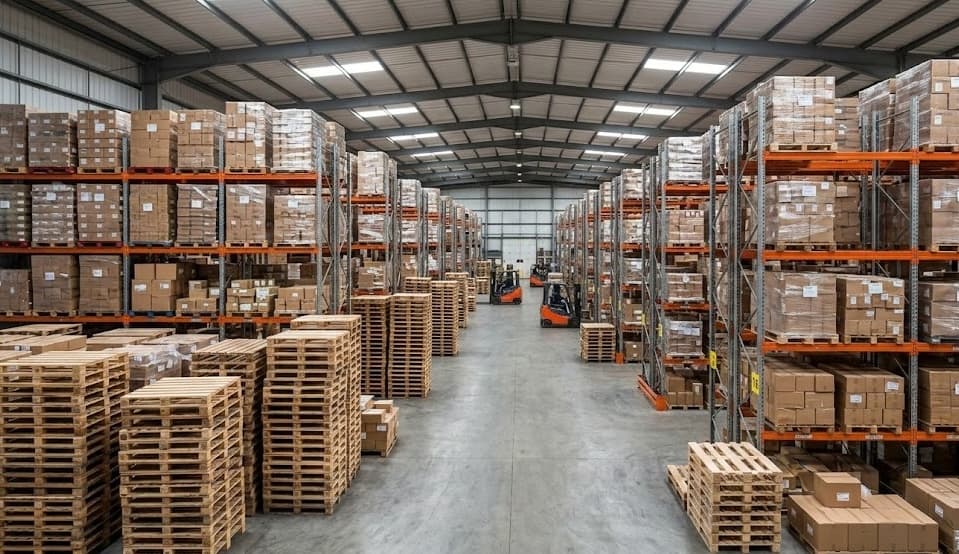
California has once again raised the bar for environmental regulation. As of January 1, 2026, new amendments to the state's Integrated Waste Management Act impose stricter requirements on how businesses handle wood packaging waste — including pallets. If your business operates in California, here's what you need to know.
The key change: businesses generating more than 4 cubic yards of wood waste per week are now required to separate wood packaging materials from their general waste stream and ensure they are recycled or composted. Landfill disposal of recoverable wood waste is no longer permitted for businesses above this threshold.
This expands on California's existing AB 1826 organic waste recycling requirements and SB 1383 short-lived climate pollutant reduction targets. The new rules specifically call out pallets, crates, and other wood packaging as materials that must be diverted from landfill.
For businesses, compliance requires three things. First, a separation system — wood packaging must be collected separately from other waste. This can be as simple as a designated area in your loading dock or a separate dumpster for wood materials.
Second, a recycling arrangement — you need a documented relationship with a licensed wood recycler. This means a contract, service agreement, or at minimum, receipts showing regular pickup and recycling of your wood packaging waste. Self-hauling to a recycler is also acceptable.
Third, record-keeping — CalRecycle now requires businesses to maintain records of wood packaging volumes generated and recycled, recycler contact information and license numbers, and diversion rates. These records must be available for inspection and retained for three years.
Penalties for non-compliance start with written warnings but can escalate to fines of $25 per ton per day for wood waste sent to landfill when recycling alternatives are available. For a business generating even modest amounts of pallet waste, these fines add up quickly.
The good news? For most businesses, compliance is straightforward and can actually save money. Here's why: pallet recyclers like Anaheim Eco Pallets offer free pickup for used pallets. In many cases, we'll even pay you for your used pallets based on their type and condition. Compare that to paying dumpster fees and landfill tipping charges for the same material.
Practically speaking, here's what we recommend for California businesses getting into compliance: First, audit your current wood waste — how many pallets do you discard per week? Where do they currently go? Second, contact a licensed pallet recycler to set up regular pickup service. Third, designate a staging area for used pallets and train your team on the new separation requirements. Fourth, set up a simple tracking spreadsheet or log to document your recycling volumes.
For our existing customers, we're already providing the documentation you need. We issue quarterly diversion reports showing volumes recycled, material recovery rates, and CO₂ impact — everything CalRecycle requires.
For new customers, we offer a free compliance consultation. We'll assess your wood waste volume, set up a pickup schedule, and provide all necessary documentation from day one.
California's regulations may feel burdensome, but they reflect an important truth: recoverable materials don't belong in landfills. The state is simply mandating what forward-thinking businesses have been doing voluntarily for years. And the economics are firmly on the side of compliance — recycling pallets is cheaper than landfilling them, with or without the regulations.