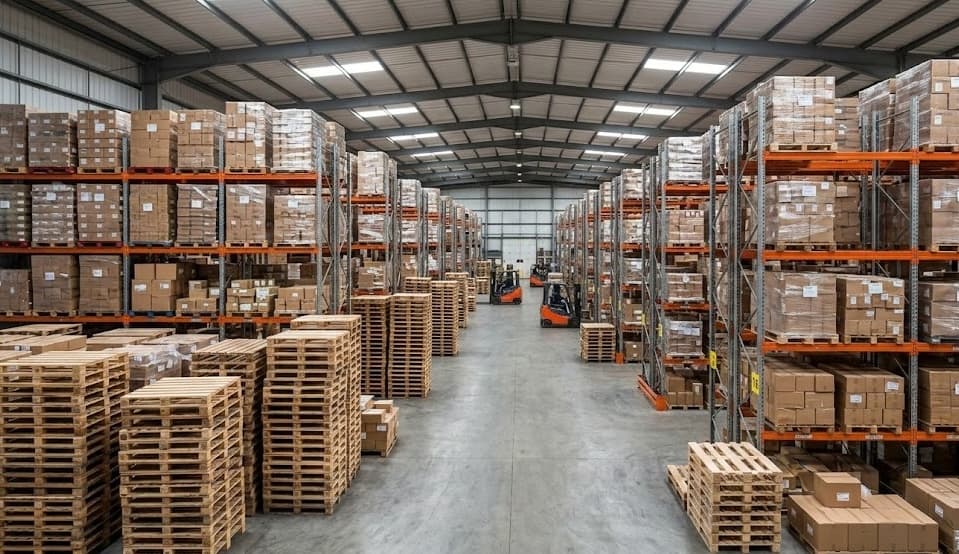
Climate change is the defining challenge of our generation. While the solutions are complex, some of the most effective actions are surprisingly simple. Pallet recycling is one of them — a straightforward practice that prevents meaningful quantities of greenhouse gases from entering the atmosphere.
Manufacturing a single new wooden pallet generates approximately 11.5 pounds of CO₂ equivalent through logging, transportation, milling, and assembly. When you recycle a pallet instead, you bypass nearly all of that carbon output. The only emissions are from the collection truck — and those are spread across dozens or hundreds of pallets per trip.
But the carbon savings don't stop there. Pallets that end up in landfills decompose anaerobically, producing methane — a greenhouse gas 80 times more potent than CO₂ over a 20-year period. By diverting pallets from landfills, recycling prevents this methane release. According to EPA estimates, the methane from landfilled wood waste accounts for approximately 8% of all landfill gas emissions.
The lifecycle math is compelling. A pallet used once and landfilled creates approximately 17 lbs of CO₂-equivalent emissions (manufacturing + decomposition). The same pallet used four times through recycling creates approximately 3.5 lbs of emissions per use cycle — an 80% reduction.
At Anaheim Eco Pallets, we recycled over 130,000 pallets in 2024 alone. That translates to approximately 728 metric tons of CO₂ prevented — equivalent to taking 158 cars off the road for an entire year, or planting 12,000 trees and letting them grow for a decade.
Water savings are another often-overlooked benefit. Manufacturing new pallets requires water for logging operations, sawmill processing, and lumber treatment. Recycling pallets requires virtually no water. Our operations use water only for occasional cleaning and dust suppression — a tiny fraction of what new pallet manufacturing consumes.
Energy savings are equally significant. A new pallet requires energy for tree harvesting, log transportation, sawmilling, kiln drying, and assembly. Recycling a pallet requires only the energy for collection, inspection, and minor repairs. The net energy savings per pallet is approximately 60%, with cumulative benefits that scale with volume.
For businesses tracking Scope 3 emissions (indirect emissions in the supply chain), pallet sourcing is a measurable category. Switching from new to recycled pallets creates documentable reductions that can be reported in sustainability disclosures, CDP submissions, and annual ESG reports.
The math is clear: pallet recycling is one of the most impactful sustainability actions a business can take. It requires no new technology, no major infrastructure changes, and no sacrifice in quality. It just requires choosing recycled over new.
Every pallet you recycle is a vote for a cleaner future. And when those votes add up across thousands of businesses, the impact becomes transformative. Join the growing community of businesses choosing recycled pallets — your carbon footprint will thank you.