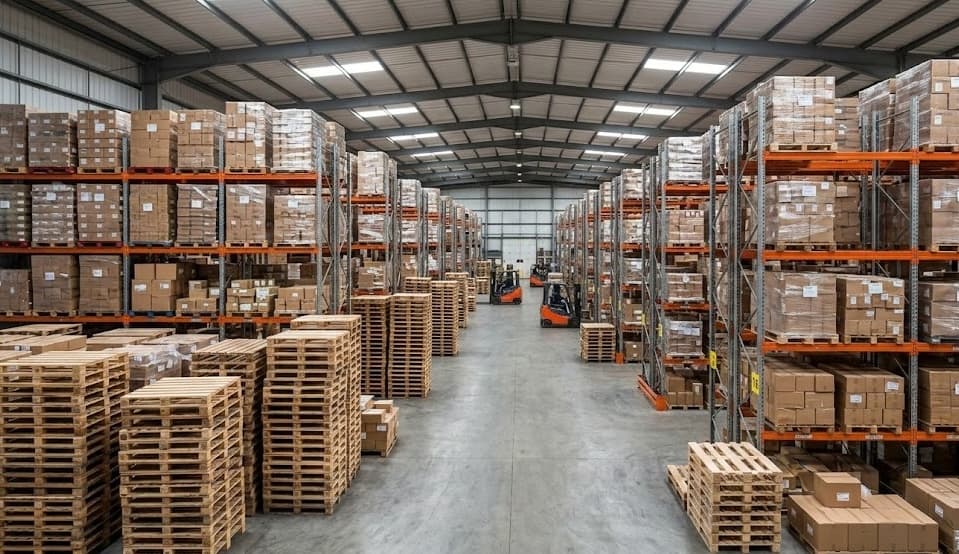
When businesses think about waste reduction, they typically focus on packaging, food waste, or office recycling. Pallets rarely make the list. But they should — because pallet waste represents a massive, easily addressable category of commercial waste that most companies completely ignore.
The US generates an estimated 420 million pallets worth of waste annually. That's pallets that are broken, discarded, or sent to landfills instead of being repaired or recycled. The volume is staggering — if you stacked all those wasted pallets, the pile would reach from Earth to the Moon and back.
For individual businesses, pallet waste translates to direct costs: purchasing new replacements, paying for dumpster space, and covering disposal fees that can range from $2 to $5 per pallet in landfill tipping charges. A mid-sized warehouse discarding 200 pallets per month is spending $4,800-$12,000 annually just to throw away material that has real value.
There's also a regulatory dimension. California's waste diversion mandates are getting stricter every year. SB 1383, AB 1826, and newer amendments require businesses to divert organic waste (including wood) from landfills. Businesses that can document pallet recycling reduce their exposure to compliance risks and potential fines that can reach $25 per ton per day.
The environmental impact is significant too. Wood decomposing in landfills produces methane — a greenhouse gas that's 80 times more potent than CO₂ over a 20-year period. By landfilling pallets instead of recycling them, businesses are actively contributing to climate change in a way that's entirely preventable.
Then there's the reputational factor. Consumers, investors, and business partners are increasingly evaluating companies on their environmental practices. ESG (Environmental, Social, and Governance) metrics have moved from nice-to-have to must-have for many business relationships. A visible pallet waste problem — stacks of broken pallets behind your building, dumpsters full of wood — sends exactly the wrong signal.
The opportunity cost is perhaps the most compelling argument. Used pallets have inherent value. Depending on type, size, and condition, a used pallet is worth $1-6 to a recycler. Instead of paying to dispose of them, many businesses can actually get paid for their used pallets. It's a rare situation where doing the right thing environmentally also puts money directly back in your pocket.
The good news? Pallet waste is one of the easiest waste streams to eliminate. Unlike complex packaging or mixed materials, pallets are straightforward to collect, sort, and recycle. Most recyclers offer free pickup because the materials have inherent value. Setting up a recycling program literally requires one phone call.
If pallets are leaving your facility in a dumpster instead of on a recycler's truck, you're literally throwing money away. And in a regulatory environment that's getting stricter by the year, you're also accumulating compliance risk.
Let us show you a better path. We offer free assessments of your pallet waste stream, free pickup, and transparent reporting on your recycling volumes. Most businesses see positive ROI from their recycling program within the first month.