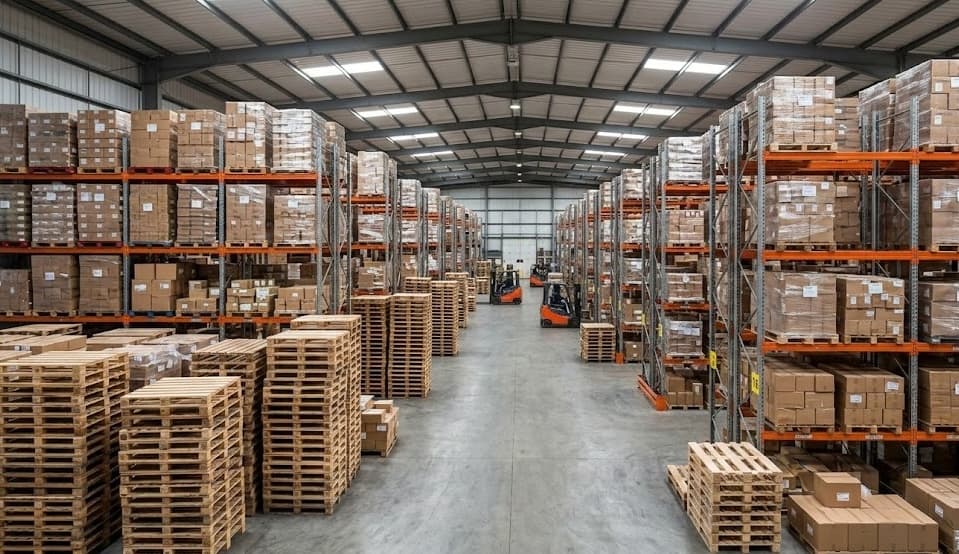
A pallet exchange program is one of the simplest ways to reduce pallet costs and waste. Instead of buying new and discarding after use, you swap used pallets for refurbished ones on a recurring basis. It's the circular economy in its most practical form — and it works for businesses of all sizes.
Step 1: Audit your current pallet usage. How many pallets do you use per month? What sizes? What condition do they need to be? Where do they end up after use? This baseline data is essential for designing the right exchange program. Track your numbers for at least one month — two or three months is better for capturing seasonal variation.
Step 2: Find a pallet exchange partner. Look for a recycler who offers exchange programs with transparent pricing, reliable pickup/delivery, and quality guarantees. Visit their facility if possible — seeing their operation firsthand tells you a lot about their quality standards and professionalism. Ask for references from businesses similar to yours.
Step 3: Set up the logistics. Determine pickup and delivery frequency. Weekly works for most operations, but high-volume businesses may need daily service. Co-locating pickup and delivery on the same truck run saves money and reduces environmental impact. Confirm that your partner can handle both fresh and used pallets on the same route.
Step 4: Designate a staging area. You'll need space for incoming (refurbished) pallets and outgoing (used) pallets. Even a small outdoor area with weather protection works. Clear labeling prevents confusion — you don't want workers accidentally sending fresh pallets back or using damaged ones that are staged for pickup.
Step 5: Train your team. Warehouse staff need to understand the system: used pallets go to the staging area, not the dumpster. It sounds simple, but changing established habits requires clear communication and follow-through. Post signs, include it in shift briefings, and designate a point person for the first month.
Step 6: Track and optimize. Monitor costs, pallet condition, and volumes monthly. Most exchange programs pay for themselves within the first billing cycle through reduced purchasing costs and eliminated disposal fees. After three months, you'll have enough data to fine-tune quantities, schedules, and grade mix.
Common pitfalls to avoid: Don't underestimate your volume — running out of pallets because you ordered too few is more disruptive than having a small surplus. Don't skip the training step — untrained workers will default to old habits. Don't forget to communicate the program to receiving staff who may be confused by the incoming refurbished pallets.
The financial impact is typically dramatic. Businesses switching from new pallet purchasing to an exchange program see cost reductions of 40-60% on pallets plus 100% reduction in disposal costs. For a business using 500 pallets per month, that can translate to $30,000-50,000 in annual savings.
We offer exchange programs for businesses of all sizes throughout Southern California. From 50 pallets per month to 5,000+, we design programs that fit your specific operation. Contact us to schedule a free consultation and cost analysis — we'll show you exactly what the savings would look like for your business.