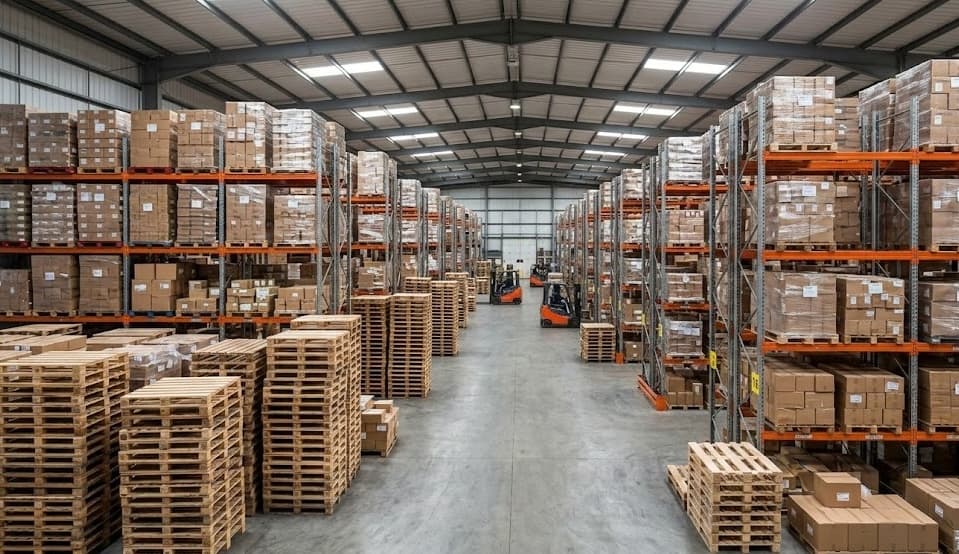
While Southern California enjoys mild winters compared to the rest of the country, moisture and temperature swings can still impact pallet quality — especially for businesses that store pallets outdoors. Understanding these effects and taking simple precautions can prevent costly damage.
Wood is hygroscopic, meaning it absorbs and releases moisture based on environmental conditions. Repeated wetting and drying causes expansion and contraction that can lead to warping, splitting, and weakened joints. Even SoCal's relatively mild wet season can push moisture levels into the danger zone if pallets aren't properly protected.
Winter rain is the biggest concern for outdoor pallet storage in SoCal. Even a few days of sustained rain can raise moisture content above the 19% threshold where fungal growth becomes a risk. Once mold gets established, it spreads quickly — especially in tightly stacked pallets where air circulation is limited.
Temperature fluctuations compound the problem. Cool nights followed by warm days create condensation on and inside wood. This moisture doesn't always evaporate during the day, especially in the interior of a pallet stack. Over time, this trapped moisture leads to the same rot and degradation as direct rain exposure.
Practical protection measures: cover outdoor pallet stacks with tarps (leaving the sides partially open for ventilation), elevate pallets off the ground with concrete blocks or dunnage, improve drainage around storage areas to prevent standing water, and increase inspection frequency during wet periods.
For businesses that receive pallets from northern states during winter, be aware that pallets shipped from cold, wet climates may arrive with elevated moisture levels. Allow them to acclimate in a dry, covered area before stacking heavy loads. Stacking heavy product on wet pallets accelerates damage and can create safety hazards.
Mold and mildew on pallets are a particular concern for businesses in food distribution, retail, and any application where appearance matters. Surface mold is usually not a structural issue — it can often be brushed off — but it can stain products and packaging that come into contact with the pallet. Prevention is always easier than remediation.
If you discover mold on stored pallets, isolate the affected pallets immediately. Surface mold can be removed with a wire brush or pressure washer and the pallets dried in sunlight. Pallets with penetrating mold should be recycled, not reused, as the structural integrity may be compromised.
A little seasonal awareness goes a long way in protecting your pallet investment year-round. The cost of a few tarps and concrete blocks is negligible compared to the value of the pallets they protect. Even in sunny Southern California, winter weather deserves respect.
Need help evaluating your outdoor storage setup? We're happy to do a quick walk-through of your facility and suggest low-cost improvements that can extend the life of your pallet inventory through the winter months and beyond.