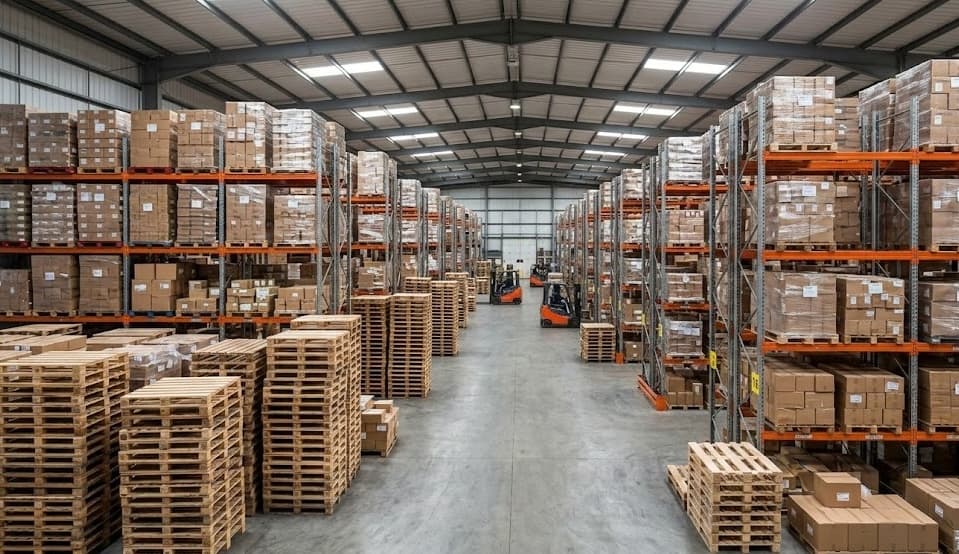
One of the most common (and costly) mistakes in international shipping is using the wrong pallet size. Different regions have different standards, and mismatched pallets can mean repalletizing at the destination — an expensive and time-consuming process that can cost $5-15 per pallet plus delay charges.
North America: The 48×40 inch GMA pallet dominates, accounting for about 30% of all pallets in circulation. It's the default for domestic shipping and widely accepted in Canada and Mexico. The 48×40 format fits two across in a standard 53-foot trailer, maximizing load efficiency for the most common transport method.
Europe: The EUR pallet (1200×800mm, roughly 47.2×31.5 inches) is the standard, managed by the European Pallet Association (EPAL). It's slightly smaller than the GMA pallet and is the most common pallet in European logistics. EPAL manages a pool of over 600 million pallets that circulate throughout the European supply chain.
Asia-Pacific: The 1100×1100mm pallet is most common in Japan, South Korea, and Australia. China increasingly uses the 1200×1000mm format, though domestic standards are less uniform than in Europe or North America. India uses primarily 1200×1000mm. Understanding the specific destination country's standard is critical for Asia-Pacific shipments.
The golden rule: always use the destination region's standard pallet size. This ensures compatibility with local racking, trucks, and handling equipment. A US-standard 48×40 pallet won't fit European racking designed for EUR pallets, and vice versa. The cost of repalletizing at destination almost always exceeds the cost of using the correct size from the start.
When calculating costs, factor in the full chain. The pallet purchase price is just the beginning. Trailer utilization changes with different pallet sizes — using a smaller European pallet in a US trailer wastes floor space, while using a US pallet in a European truck may not fit at all. These logistics costs dwarf the pallet purchase price.
Special considerations for ocean freight: container dimensions add another layer of complexity. A standard 20-foot container can hold different numbers of pallets depending on the pallet size and orientation. The wrong pallet size can waste 10-15% of container capacity — a significant cost at current ocean freight rates.
Some businesses maintain inventories of multiple pallet sizes for different shipping destinations. This requires more storage space and management effort, but ensures compliance and efficiency for every shipment. For businesses that ship to the same destinations regularly, this investment pays off quickly.
If you ship to multiple regions, consider maintaining a small inventory of each regional size, or work with a supplier like us who stocks international sizes alongside the standard GMA format. We carry EUR pallets, 1100×1100mm pallets, and several other international standards to support our export customers.
Not sure which size you need for a specific destination? We maintain a reference database of pallet size requirements by country and can advise on the correct format for any international shipment. Getting it right the first time saves money, time, and headaches.