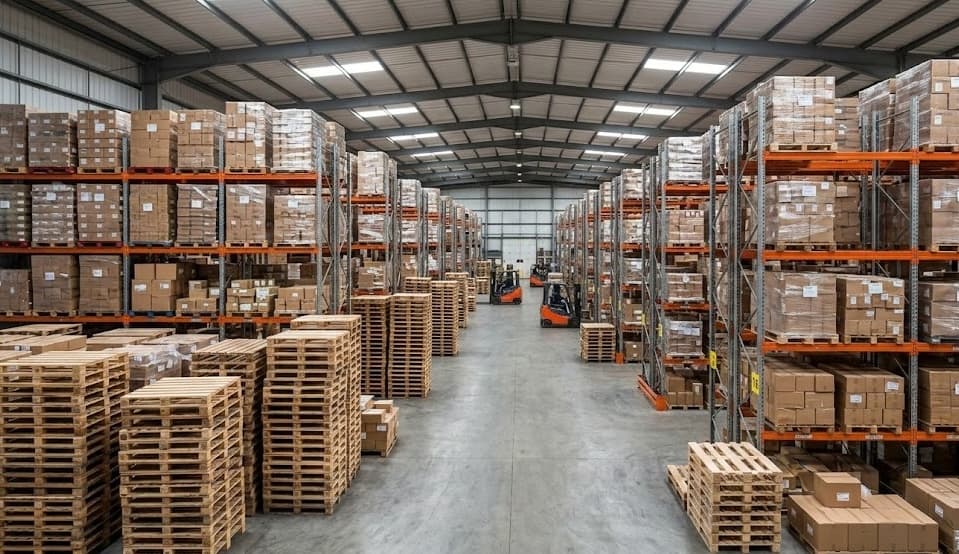
When we set out to achieve a 98% waste diversion rate, many in the industry told us it wasn't realistic. Typical pallet recyclers achieve 80-90% diversion — the remaining material is seen as unavoidable waste. We disagreed. Here's how we proved them wrong.
The key insight was that there's no such thing as pallet "waste" — only material that hasn't found its highest-value use yet. Every component of a pallet has potential: boards become new pallets, sawdust becomes mulch, metal becomes recycled steel. The challenge isn't the material itself — it's building systems that capture value from every fraction.
Our process starts with meticulous sorting. Every incoming pallet is assessed within minutes of arrival. The decision tree is clear: Can it be reused as-is? Repaired? Dismantled for parts? Processed into raw materials? Each path has defined criteria, and our sorters are trained to make these decisions quickly and accurately.
Investing in a commercial wood grinder was a game-changer. Pallets that can't be repaired or dismantled are ground into chips that become mulch, animal bedding, or biomass fuel. This single piece of equipment eliminated our largest waste stream. Before the grinder, non-repairable pallets were our biggest disposal challenge. Now they're a revenue source.
The grinding operation produces multiple grades of output. We screen the material by size: coarse chips go to landscaping companies for mulch, medium chips go to animal bedding suppliers, fine particles are compressed into fuel pellets for biomass energy generators. Each stream has its own customer base and pricing structure.
Metal recovery was another important step. Pallet nails — made from high-carbon steel — are captured by magnetic separators positioned after the grinding stage. The collected metal is baled and sold to steel recyclers. It's a small but meaningful revenue stream that also eliminates a contamination problem for our wood products.
We partnered with specialized recyclers for the really difficult materials. Paint and stain from decorated pallets, adhesive residue from labels, and other non-wood contaminants were previously destined for landfill. By working with chemical and mixed-material recyclers, we found outlets for most of these problem streams.
The final 2% that we haven't yet been able to divert consists of contaminated materials — pallets exposed to hazardous chemicals, biological contamination, or substances that make them unsuitable for any recycling stream. We're actively working with new partners to close this gap.
Data tracking made the whole system work. We monitor diversion rates daily, tracking the weight of material entering each stream. When the diversion rate dips below target, we investigate immediately. Usually the culprit is a new type of contamination or a batch of non-standard material that our system hasn't encountered before.
The lesson? Near-zero waste isn't magic — it's systems thinking applied rigorously. Every material has value if you're creative enough to find it and systematic enough to capture it consistently. The investment in equipment and processes has paid for itself many times over through the value of recovered materials.
Our goal is to reach 99.5% diversion by 2027. We believe it's achievable, and we're investing in the infrastructure and partnerships to make it happen. Every fraction of a percent closer to 100% represents another material stream we've found a use for.