The traditional linear supply chain — take, make, dispose — is reaching its environmental limits. In response, a new paradigm is emerging: the circular economy. It's not just an academic concept anymore — it's being implemented by some of the world's largest and most successful companies.
In a circular supply chain, materials are kept in use for as long as possible. Products are designed for durability, components are repaired rather than replaced, and end-of-life materials are recycled back into the production cycle. The goal is to eliminate the concept of waste entirely — every output becomes an input for something else.
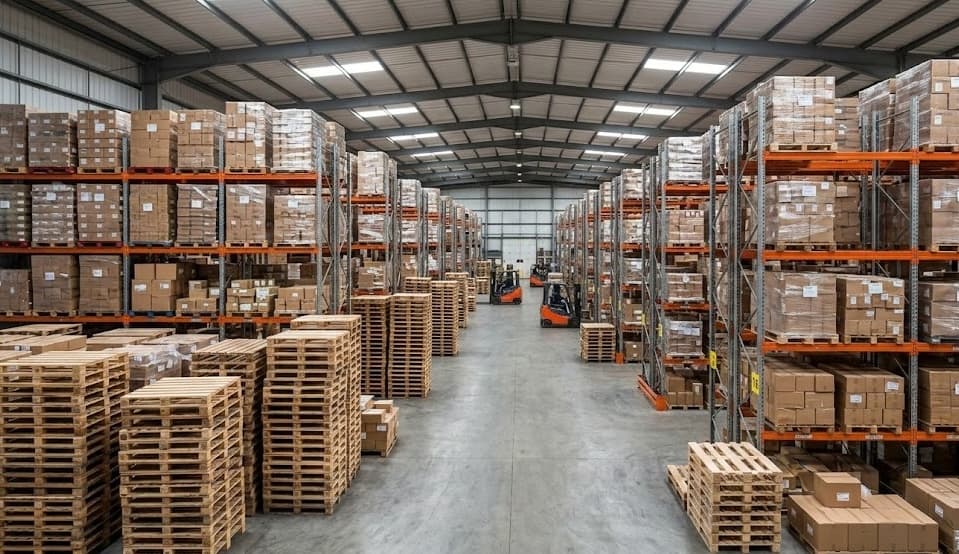
The pallet industry is a natural fit for circular economy principles. A single wooden pallet can be used 4-7 times in its original form, repaired multiple times to extend that further, and ultimately recycled into mulch, biomass fuel, or new wood products. Nothing needs to go to waste. The pallet lifecycle is a textbook example of circularity.
Major corporations are taking notice. Companies like IKEA, Walmart, and Amazon have all implemented pallet reuse and recycling programs as part of their broader sustainability commitments. IKEA has pledged to become fully circular by 2030, and their pallet program is one of the most visible elements of that commitment.
The economics of circularity are compelling. Ellen MacArthur Foundation research estimates that circular economy practices could generate $4.5 trillion in economic benefits globally by 2030. In the pallet industry specifically, circular practices reduce per-unit costs by 40-60% while creating local jobs in repair and recycling.
For mid-sized businesses, entering the circular economy doesn't require massive investment. Simply switching from single-use new pallets to a recycled pallet program creates an immediate impact. Adding a pallet return program — where used pallets come back to the recycler for credit — closes the loop and maximizes savings.
The circular economy also creates competitive advantages beyond cost savings. Customers increasingly prefer to work with suppliers who demonstrate environmental responsibility. Investors are directing capital toward companies with strong ESG metrics. And employees — especially younger workers — prefer employers whose values align with sustainability.
Technology is accelerating the transition. IoT tracking allows companies to monitor pallet movements and optimize return logistics. AI-powered sorting can identify repair opportunities that human sorters might miss. Digital platforms are connecting pallet supply and demand more efficiently than ever before.
The regulatory environment is pushing in the same direction. Extended Producer Responsibility (EPR) legislation is spreading globally, making companies financially responsible for the end-of-life management of their packaging. Businesses that already have circular practices in place will be ahead of the curve when these regulations arrive.
The circular economy isn't just an environmental ideal — it's an economic advantage. Businesses that embrace it reduce costs, improve resilience, and position themselves favorably with increasingly sustainability-conscious consumers and partners.
At Anaheim Eco Pallets, circularity is our entire business model. Every pallet we handle is kept in the loop for as long as physically possible. We're not just participants in the circular economy — we're enablers of it for every business we serve.