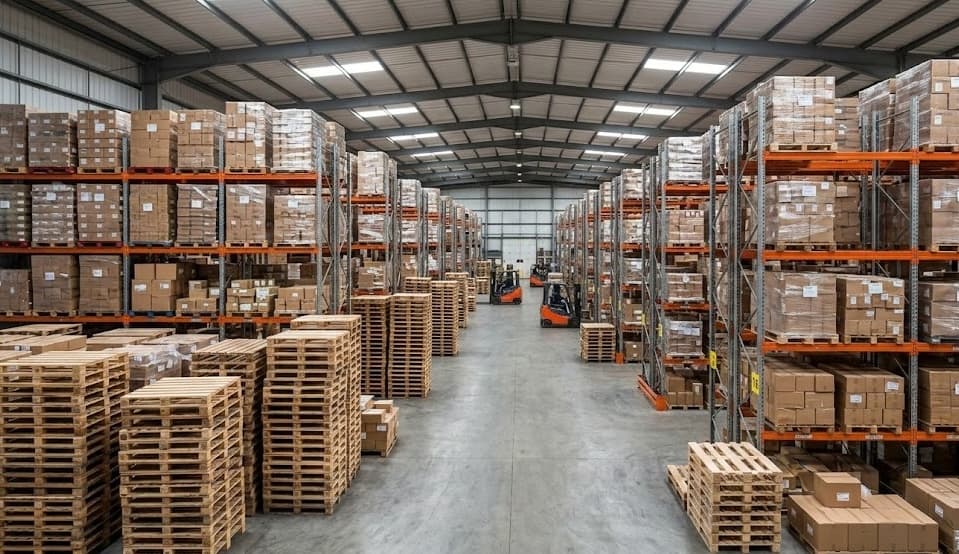
The United States uses approximately 2 billion pallets at any given time. Each year, roughly 500 million new pallets are manufactured, and an estimated 50-75 million end up in landfills. The economic and environmental cost of this waste is enormous — and largely invisible to the businesses creating it.
Direct costs: At an average value of $5 per pallet (accounting for mix of grades and conditions), 75 million landfilled pallets represent $375 million in wasted material value annually. That's material that could have been reused, repaired, or recycled into valuable products. Instead, it sits in a hole in the ground, generating methane.
Disposal costs: Landfill tipping fees for wood waste average $45-65 per ton in California. Pallets average 40-50 lbs each. That's another $75-125 million in unnecessary disposal costs. Businesses are literally paying money to destroy something that has positive value to recyclers.
Environmental costs: Using EPA's social cost of carbon ($51/ton CO₂), the methane emissions from landfilled pallets carry an additional $200+ million in environmental damage. This is a conservative estimate — some economists put the social cost of carbon at $150+ per ton, which would triple this figure.
Lost opportunity: Every landfilled pallet is a pallet that could have been repaired ($2-4), resold ($4-8), or recycled into valuable mulch, biomass, or raw materials. The opportunity cost of not capturing this value adds another significant layer to the total waste figure.
Labor and transportation waste compound the problem. Businesses spend worker time handling pallets destined for landfill — stacking them in dumpsters, coordinating disposal pickups, managing dumpster rentals. This labor produces zero value. With a recycling program, the same labor investment produces cost savings and revenue.
The total? Over $4 billion annually in combined direct waste, disposal costs, environmental damage, lost opportunity value, and wasted labor. And this is a conservative estimate that doesn't include the harder-to-quantify costs of regulatory risk, reputational damage, and lost customer trust.
Regional variation matters. California, with its high landfill costs and strict regulations, feels these costs more acutely than other states. But the trend nationwide is toward higher disposal costs and stricter regulations. Businesses that establish recycling programs now are positioning themselves ahead of the curve.
The solution isn't complicated: more recycling infrastructure, better awareness among businesses, and economic incentives that make recycling the default choice. We're working on all three fronts — expanding our capacity, educating our community, and making it as easy as possible for businesses to do the right thing.
The most encouraging data point: the pallet recycling rate has been steadily climbing. From 70% in 2015 to approximately 82% in 2025. Every percentage point improvement diverts millions of pallets from landfill and prevents thousands of tons of greenhouse gas emissions. The trend is in the right direction — we just need to accelerate it.